
Strength Training at Home for Women 35+: A Simple 20-Minute Routine
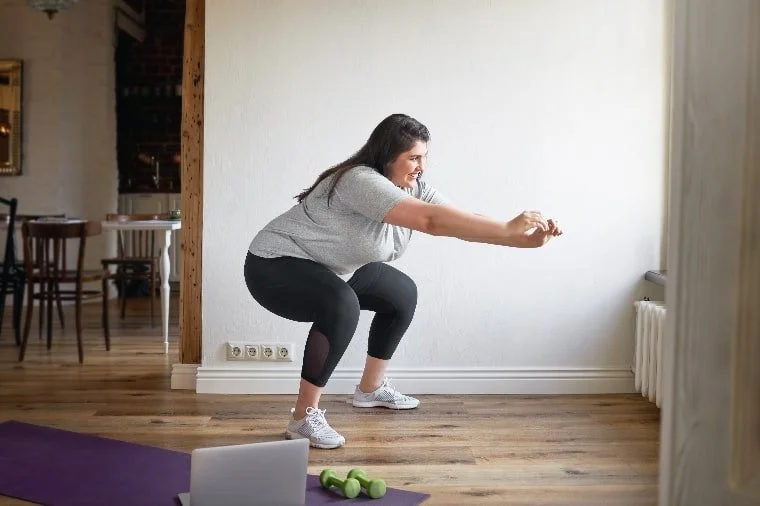
You don't need a gym membership or hours of spare time to get stronger. A few short strength sessions at home each week can make a real difference to your energy, mood, body composition and long-term health.
And if you're in your late 30s, 40s or beyond, strength training is one of the most important things you can do for your body.
Why strength matters more as we age
From around our mid-30s, we gradually start to lose muscle. As estrogen declines through perimenopause and menopause, we also lose bone density more quickly. Muscle supports your metabolism, blood sugar balance, balance and posture, and strong muscles help protect your bones and joints.
The good news: you can build and maintain muscle at any age.
A simple home strength routine
Do this 2 to 3 times a week, with at least a day of rest between sessions. Start with your body weight. When it feels easy, add a backpack with books, dumbbells or a resistance band.
Warm up (5 minutes): march on the spot, arm circles, hip circles and gentle squats.
Then do 2 to 3 rounds of:
Squats or sit-to-stands from a chair – 10 to 12 reps
Push-ups (against a wall, bench or on your knees) – 8 to 12 reps
Glute bridges – 12 to 15 reps
Reverse lunges (hold a chair for balance if needed) – 8 to 10 each leg
Bent-over rows with dumbbells, water bottles or a band – 10 to 12 reps
Plank or dead bug – 20 to 30 seconds
Rest about a minute between rounds. The whole session takes 20 to 30 minutes.
Tips to get results safely
Focus on good form. Move slowly and with control. Quality matters more than speed or how many you do.
Progress gradually. Once you can do all the reps comfortably, add a little weight, a few more reps or an extra round. The last few reps should feel challenging.
Eat enough protein. Your muscles need protein to repair and grow. Aim to include a palm-sized portion of protein at each meal, like eggs, Greek yoghurt, fish, chicken, tofu or legumes.
Rest and recover. Muscles get stronger between sessions, not during them. Sleep and rest days count.
Keep walking. Strength training plus daily walking is a powerful combination for your heart, mood and blood sugar.
The bottom line
Two or three short strength sessions a week at home can help you feel stronger, more energetic and more confident, and protect your muscles and bones for the years ahead. Start where you are and build slowly.
Not sure how to fit it all in?
If you want support with movement, nutrition and energy during perimenopause and beyond, book your free initial assessment.
This article is for educational purposes and is not a substitute for medical advice. If you have an injury, a health condition or are new to exercise, check with your doctor or a physio before starting.
